
TL;DR
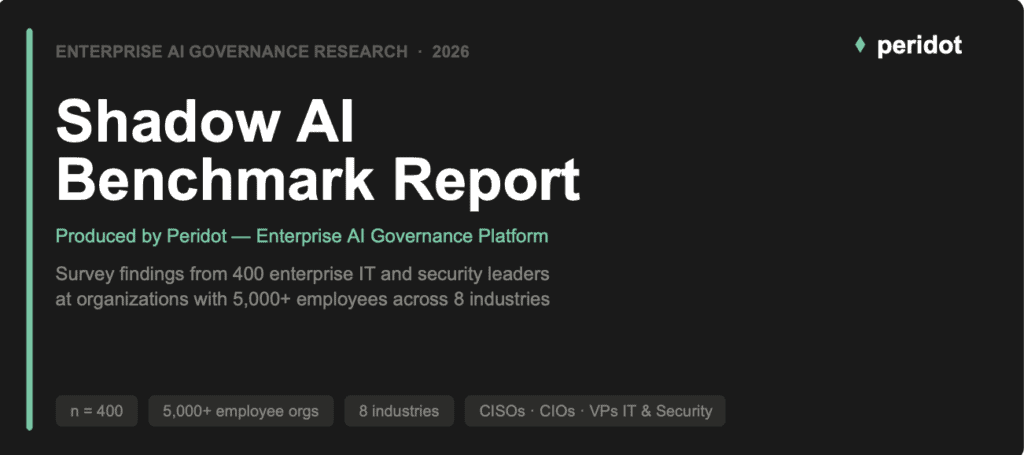
We analyzed AI usage across 429 enterprise respondents and conducted 23 in-depth interviews. The majority of organizations lack visibility into AI tools, usage patterns, and data flow. AI adoption is happening faster than governance, creating significant blind spots in security, compliance, and operational control. The Shadow AI Benchmark Report of 2026 was released last month.
Introduction
Most enterprises believe they are “adopting AI.”
In reality, AI is already everywhere inside the organization—just not in a controlled way.
We analyzed enterprise AI usage across:
- 429 respondents
- 23 in-depth interviews with security, IT, and GTM leaders
The goal was simple:
Understand how AI is actually being used inside organizations—not how leadership thinks it’s being used.
The gap is larger than expected.
Key Finding #1: Most Organizations Lack Visibility Into AI Usage
Across respondents, a consistent pattern emerged:
- AI tools are widely used across teams
- Visibility into usage is limited or fragmented
- No centralized system tracks AI activity
In many cases:
- IT teams were unaware of the majority of tools in use
- Leadership assumed usage was “controlled” because a few tools were approved
This creates a false sense of security.
Key Finding #2: Shadow AI is the Default, Not the Exception
The majority of AI usage happens outside formal approval.
Common patterns:
- Employees using free AI tools with personal accounts
- Teams adopting tools without procurement involvement
- AI features embedded in SaaS tools going unnoticed
This aligns with broader industry trends showing high levels of “bring your own AI.”
For a deeper breakdown, see what shadow AI is and how to detect it.
Key Finding #3: Data Flow is the Biggest Blind Spot
Most organizations are not just missing tool visibility.
They are missing data visibility.
Key issues include:
- Sensitive data being input into AI tools without oversight
- No tracking of where that data goes or how it is processed
- Lack of audit trails for AI-generated outputs
This is where risk accumulates fastest.
Key Finding #4: AI Adoption is Bottom-Up, Not Top-Down
AI is not being rolled out centrally.
It is spreading organically:
- Marketing teams experimenting with content tools
- Sales teams using AI for outreach
- Engineers adopting copilots
- HR testing automation tools
By the time IT gets involved:
Adoption is already widespread
(If you’re starting from scratch, begin with discovering all AI tools used across your enterprise.)
Key Finding #5: Most Organizations Underestimate AI Usage by 2–5x
One of the most consistent findings:
Actual AI usage is significantly higher than perceived usage
Why?
- Shadow AI is invisible
- Embedded AI tools go unnoticed
- Employees don’t report usage
This gap makes governance difficult.
What This Means for Enterprises
These findings point to a clear reality:
- AI adoption is accelerating
- Visibility is lagging
- Risk is increasing
Organizations are operating in a state of:
high adoption + low visibility
This is not sustainable.
What We See in Real Enterprise Environments
Across interviews:
- Security teams are increasingly concerned about AI-related data exposure
- IT teams struggle to track usage across departments
- Leadership lacks clear reporting on AI adoption
The biggest challenge is not whether to adopt AI.
It’s:
how to understand and control what is already happening
Where Most Organizations Go Wrong
Common mistakes include:
- Assuming approved tools represent total usage
- Treating AI audits as one-time exercises
- Focusing on policy before achieving visibility
The result:
- policies that don’t reflect reality
- governance that can’t be enforced
What Needs to Happen Next
Based on the data, organizations need to:
- Establish baseline visibility into AI tools
- Continuously track usage across teams
- Identify and manage shadow AI
- Implement governance frameworks aligned with real usage
If you haven’t audited usage yet, see how to audit AI usage across teams.
How Peridot Helps
The core issue is not adoption—it’s visibility.
Peridot is designed to give enterprises real-time visibility into AI tools, usage patterns, and data exposure across teams.
Instead of relying on surveys or periodic audits, organizations can continuously monitor AI activity and reduce risk proactively.
FAQ
How many organizations participated in the analysis?
429 respondents and 23 in-depth interviews.
What is the biggest gap in enterprise AI adoption?
Lack of visibility into tools, usage, and data flow.
What is shadow AI?
AI tools used without approval or oversight.
Why is visibility important?
Without visibility, organizations cannot manage risk, enforce policies, or ensure compliance.
Pingback: AI Tool Sprawl: How to Identify and Measure It in Your Organization - Peridot Blog
Pingback: How to Track AI Tool Usage Across Employees and Departments - Peridot Blog
Pingback: What is Shadow AI and How to Detect It in Your Organization - Peridot Blog
Pingback: How to Audit AI Usage Across Teams (Step-by-Step) - Peridot Blog
Pingback: How to Discover All AI Tools Used Across Your Enterprise - Peridot Blog
Pingback: How to Build Your First App Without Code: 2026 No-Code Guide - Peridot Blog